
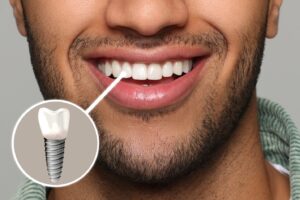
Abutment, osseointegration, periodontist – these are terms associated with dental implants that may sound foreign when you meet with your dentist. If you’re concerned you will leave your appointment feeling lost or overwhelmed, don’t be. Instead of worrying about being able to understand what your dentist is saying, here is a simple guide to some of the most common implant terms.
Periodontist
A periodontist specializes in preventing, diagnosing, and treating gum disease. They are also trained and qualified to place dental implants. Periodontics focuses on diseases that can affect the gums, alveolar bone, and nearby soft tissues.
Abutment
An abutment is a small, often metal connector that attaches to the top of your dental implant. It is placed after osseointegration is complete, and it helps hold the custom restoration in place. This might be a crown, bridge, or denture.
Titanium
Titanium is a common material used to create dental implants because it is biocompatible and highly resistant to corrosion. It presents a high success rate for implant placement and integrates well with existing soft tissues and bone. This makes it a primary material dentists consider when recommending dental implants to patients.
Dental Implant
A dental implant is a small device that looks like a tiny screw but functions like a natural tooth root. It fuses with your jawbone, supporting your dental restoration. With proper care, this prosthetic can last your entire life, making it a superior tooth replacement compared to traditional dentures or dental bridges.
Osseointegration
This is the process of fusing the dental implant with your underlying jawbone to create better strength and support for artificial teeth. The term comes from Greek and Latin and means “bone” and “to make whole.”
Implant-Retained Denture
Unlike traditional dentures that are removable, implant-retained dentures are held in place by dental implants. Only your dentist can remove them. This custom prosthetic requires four to six implants, all positioned along the jaw, to hold it in place. It can be used to replace multiple missing teeth or a full arch.
Bone Graft
Although not necessary for all patients, many require a bone graft before receiving dental implants. When the alveolar ridge has deteriorated, it needs additional support to ensure these prosthetics remain firmly in place. A bone graft combines existing bone with that from another part of your body or donor tissue. The two fuse and heal, creating a denser, more stable foundation for your new implants.
Understanding these terms can make it less daunting to discuss dental implants with your dentist. Whether you are in the early stages of considering these prosthetics or reviewing your treatment plan, you can feel more confident in your decision and what to expect as you pursue a permanent smile.
About Grand Dental – Prairie View
Grand Dental – Prairie View offers a wide range of services to help patients improve and rebuild their smiles. Dental implants remain one of the most popular forms of tooth replacement, and our in-house periodontist is here to make the process as simple and stress-free as possible. If you have questions about these prosthetics, visit our website or call (815) 895–6100 to schedule an appointment.